Friday, November 9, 2018

The possibility of a single-pilot passenger plane

Image source: best-wallpaper.net

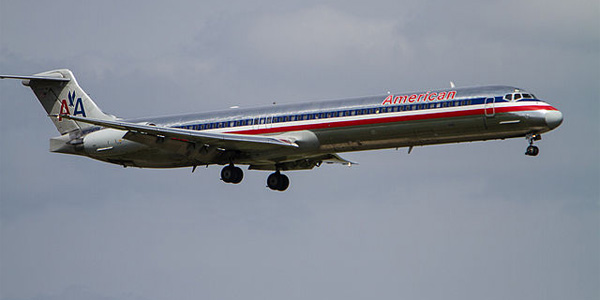
There was a time when passenger planes had three pilots on the flight deck. Then in the 1980s, the development of Boeing 757 transformed the way cockpits are designed. The number of pilots had also been reduced to two with the help of the progress of flight technology.


Decreasing that number further to one has proven to be difficult. Firstly, current European aviation regulation requires passenger planes with at least 19 seats to be flown by a minimum of two pilots for safety, especially in long-haul journeys, and security. Passengers would also probably be concerned of flying in a single-pilot plane because of news of accidents, deliberate or otherwise, of aircrafts.

Image source: caa.gov.qa

But having commercial jets that can be operated by one pilot may become a necessity in a few years. There is currently a pilot shortage, which is exacerbated by the fact that the aviation industry is continuing to grow. Furthermore, airline companies can save billions of dollars in salaries and training expenses by requiring just a single pilot.


Aircraft manufacturers are designing advanced cockpits that can be operated by a single person. For example, the vast array of knobs and switches can be changed into more digital interfaces. It may not be in the near future, but single-pilot passenger aircrafts are becoming more and more possible.


Scott Beale is an accomplished business developer, entrepreneur, and aviation professional. His expertise includes commercial sales and marketing of aviation products, government contracting, FAA certifications, maintenance report operations, and startup operations. Visit this website for more information about him.

Wednesday, October 24, 2018

The need for speed: The fastest aircraft

Image source: fineartofdecals.com
Flight has always captured man’s imagination. When the Wright Brothers first came out with the airplane, people were amazed. When jet planes emerged after World War II, they changed aviation forever.


Over the past few decades, aircraft manufacturers have pushed the envelope on the development of airplanes. Together with the advancement of technology, few of the things the aviation industry only dreamed about were developed to challenge the very laws of physics. Here are a few of the fastest aircraft in the world.


Lockheed SR-71 Blackbird: As far as fast jets go, this is the most popular one. The SR-71 Blackbird was manufactured by Lockheed for the purpose of reconnaissance and surveillance. It is also equipped with stealth features and with its 2,200 mph top speed, it’s even faster than missiles themselves.


North American X-15: The X-15 is a rocket-powered aircraft that has as its top speed, a staggering 4,520 mph. Its design, which includes an exaggerated tail and rocket thrusters (which are used to steer), allows the aircraft to reach such a mind-boggling speed. Many industry experts consider the X-15 to be the world’s first space plane.


Image source: sploid.gizmodo.com
Bell X-2 Starbuster: The X-2 Starbuster has a tragic story. Test pilot Milburn G. Apt took the plane and broke the record as the aircraft went past Mach 3, at 2,094 mph. He died due to pilot error while making a sharp turn. The aircraft was deemed too dangerous, and flights were stopped in less than a year.


Aviation and aerospace professional Scott Beale was responsible for expanding FlightWorks from a $1.5 million-dollar business when he purchased it in 2000 to a $90 million enterprise when he sold the business in 2010. For more reads on the aviation industry, visit this page.

Important points on airplane maintenance and airworthiness


Image source: faa-aircraft-certification.com
One cannot emphasize enough the importance of airplane maintenance and airworthiness. To keep all the parts of an airplane in perfect working order is a must, and the job has no room for error. This is why flying is still considered one of the safest ways to travel.


There is considerable effort in keeping an aircraft airworthy. To make the plane fit to take people to the skies, it has to comply with strict conditions. But once these conditions are met, people can be assured that it is safe to ride.


Factors for airworthiness include overall design, redundancy features, and the continued maintenance of its parts. Every time a plane lands after a long flight, especially through rough weather, it is inspected for airworthiness.


The maintenance of airplanes is significant to its airworthiness. Repairs have to be made and completed, in the proper way. Incomplete or improper repairs may not show up right away, but may very well lead to disaster.


Image source: robbreport.com
Thankfully, in the aviation industry, people responsible for airplane maintenance and airworthiness are thoroughly trained, therefore, highly skilled. They undergo strict examination processes to make sure they never miss so much as a single loose bolt.


Do you love flying? What are the things that make you feel safe during the travel? Feel free to share your opinion in the comments below.


Scott Beale has led various aviation firms in attaining growth in revenues with his competencies in strategic and tactical planning, account development and acquisition, government contract and management, sales team training and supervision, and financial reporting. More reads on aviation here.

Friday, October 5, 2018

Flight: The ultimate hobby

Image source: theraf.org
A lot of people, especially those who don’t have a pilot’s license, see flying as a job. Except for the occasional recreational flyer, the masses see flying as work. However, an overwhelming majority of pilots will have to disagree.


Flying is more like a vocation, something someone is called to do, a passion. In that sense, one can view flying as the ultimate hobby. It’s fun, fulfilling, but takes a lot of time and hard work.


Recreational flyers, of course, can afford to pay to fly. And for them, flying really is a hobby. Love for the adventure of flight then sustains commercial airline pilots who have to endure several hours of flight while getting only a few hours of rest.

Image source: infocusmagazine.ca

Flight allows pilots to physically reach more places in their lifetime compared unlike most of the rest of the people in the world. To be able to do this requires years of training, since many pilots have the responsibility of not only getting themselves, but hundreds of others as well, to their destination safely.


And while being a pilot is a financially rewarding job, for the true aviator, this is only secondary. Remember that old adage that says if you love what you’re doing, you’ll never have to work a day in your life? That’s flying. That’s the ultimate hobby, right there.


Aviation and aerospace professional Scott Beale was responsible for expanding FlightWorks from a $1.5 million-dollar business when he purchased it in 2000 to a $90 million enterprise when he sold the business in 2010. For more info on Scott’s work and career, visit this page.

Saturday, September 1, 2018

The Peculiar Rules Of Air Travel Routes

Everyday wisdom suggests that the fastest way to a destination is a straight line, and so it usually is with land transportation, with roads and railways cutting a route as straight as possible between two points. Comparing the flight paths taken by aircraft to that of maps, however, would reveal that airplanes do not fly in straight lines. In many cases, air travel takes on a semicircular appearance or even immensely confusing paths across the globe to reach their destination.

The most obvious of the reasons behind the peculiar direction of flight paths is the shape of the Earth itself. The Earth is round, and the shortest way to two destinations across the planet is not a straight line but an arc.


Image source: lfightradar24.com

Air currents and other atmospheric conditions are also a critical factor in planning the flight paths of aircraft. Specific air currents like the Gulf Stream can aid aircraft across vast distances, reducing travel time by a considerable margin. Even individual variations of wind patterns can make certain international flight routes financially preferable.

The limitations of aircraft have also affected flight paths in the past. Transatlantic flights from North America frequently used to stop over Shannon, Ireland, on their way to continental Europe for refueling purposes.


Image source: weatherworksinc.com

The politics of flight are also a crucial factor in determining the flight paths of international air travel. Major airlines pay an immense amount of money to sovereign nations to pass through their airspace en route to their destination, with some nations charging heftier fees than others. Air routes are often planned along minimizing and avoiding these fees, which can considerably add up, leading to unusual flight paths. In the past, no fly zones—such as those in the former Soviet Union—have created unusually long international flights.

Scott Beale is a seasoned entrepreneur and business developer with over 20 years of experience in the aviation industry. Learn more about the fine points of the industry of air travel from this blog.


Fun Ways To Make Learning Math Interesting For Students

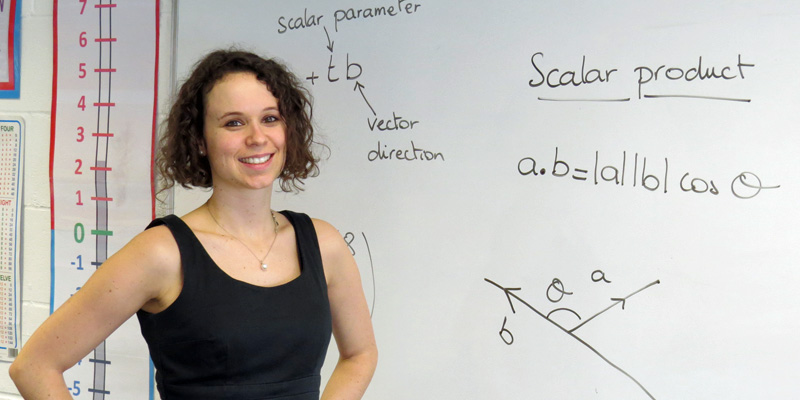
Almost every student has problems with mathematics at one point in their academic lives. Numbers, formulas, and equations aren’t the most dynamic topics in the world. That’s why math teachers have to be vigilant in making sure their students understand these concepts besides them asking their class if they understand the lessons. Here are some fun ways on how to make mathematics interesting for students.

Use real-world examples: If you can’t think of any way your students can use what you’re teaching in the real world, then they wouldn’t too. Real world applications are probably one of the most difficult aspects to zero in on when teaching mathematics but are highly effective.

Image source: pearsoned.com

Create learning stations: Math can be difficult to understand for individual students. This is why some educators form learning stations inside the classroom. Learning stations are made by forming or assigning a group of students in class a special delegation, each doing something different from the rest. Learning stations can focus on reviewing skills, proper usage of math apps, drill practice, and even games.

Modifying classroom response system: Asking students to raise their hand if they don’t understand the equation can lead to them not raising their hand at all. By changing the dynamics of classroom response systems, teachers can get a more authentic feel for the mood of the class. You may want to replace raising hands to using clickers for a more discreet response.

Image source: womanthology.co.uk

As an educator, the goal of Adam M. Smith is to make sure that every student leaves the classroom with enough understanding of the subject matter to have an informed discussion about current social/political/economical issues around the dinner table. For more insightful reads on education, visit this page.


Saturday, August 4, 2018

What It Takes To Be An Airborne Intelligence, Surveillance, And Reconnaissance (Isr) Operator

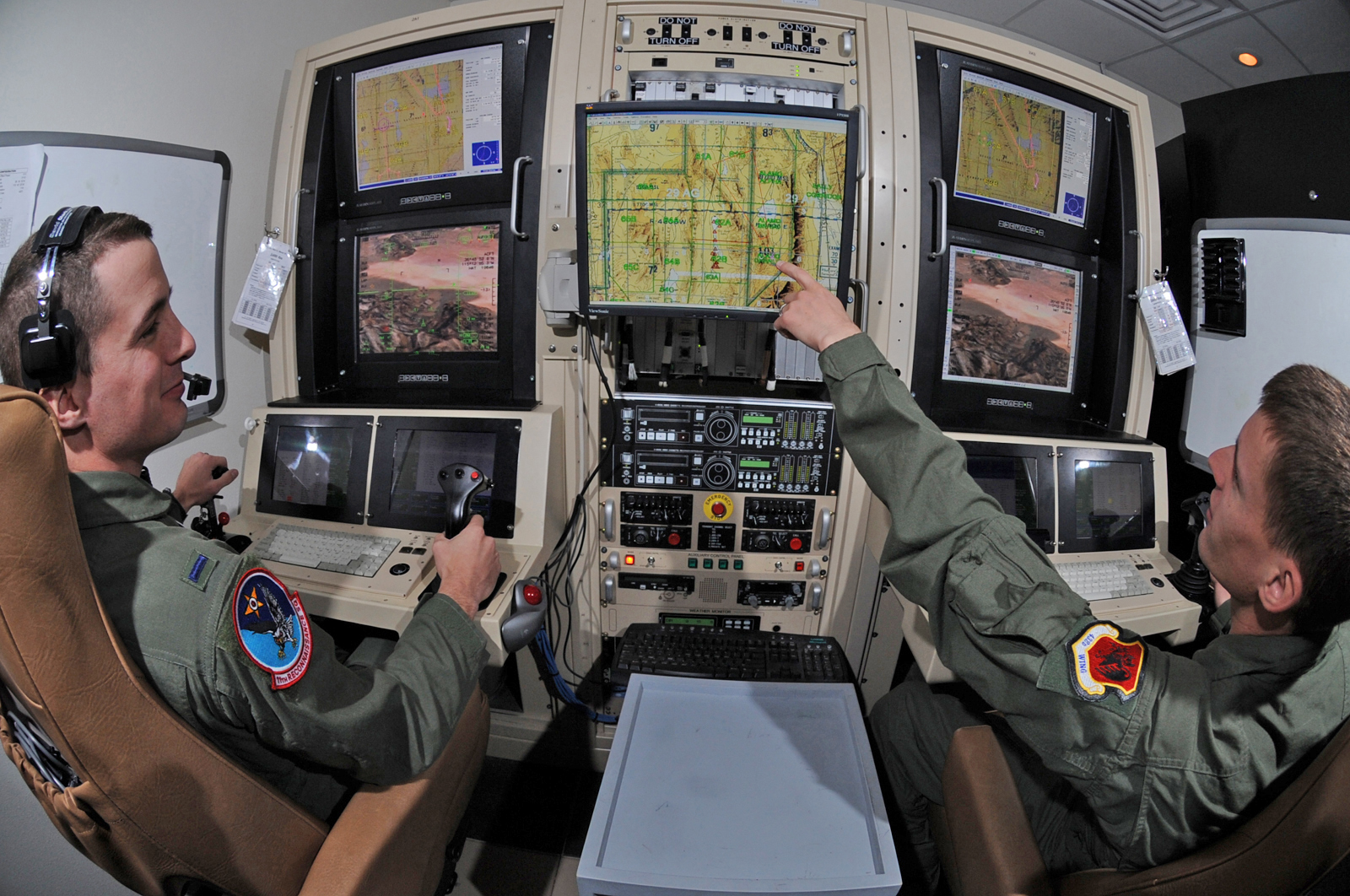
An ISR operator plays a crucial role in both the planning and execution of a country’s air force missions. They oversee the collecting and collating of information on the enemy’s activity, movements, and strength.

Image source: offutt.af.mil

ISR operators deliver this confidential and top-secret intelligence to the higher-ups in the command using various classified equipment and intel-gathering techniques. They are veritable specialists that require rigorous training to ensure that the air force is always ahead of the enemies’ own intel and that future missions are guaranteed success.

For one to be qualified to apply for an ISR operation position, they must have graduated from high school and attained at least 15 college credits in the GED. The applicant must likewise display extensive knowledge of aircraft equipment and procedures. They should be eligible for deployment and mobilization anywhere in the world and must complete various tests including a polygraph and Single Scope Background Investigation (SSBI).

The ISR operator candidate should be between the ages of 17 and 39 and must be at least 64 inches (5’3”) in height and no taller than 77 inches or 6-foot-4. Also, they must have no history of any temporomandibular joint pain or disorder. When the applicant is deemed qualified, he or she must complete 7.5 weeks of both basic military training and Airmen’s Week.

Image source: af.mil

Aviation and aerospace professional Scott Beale was responsible for expanding FlightWorks from a $1.5 million-dollar business when he purchased it in 2000 to a $90 million enterprise when he sold the business in 2010. For more info on Scott’s work and career, visit this page.