Showing posts with label airplanes. Show all posts

Monday, March 18, 2019

Fun facts about airplanes that you probably didn’t know

The airplane is one of the most important inventions of the 20th century, effectively transforming relations among nations and leading to the growth of the global economy and globalization. But while we tend to take this aviation marvel for granted nowadays, here are some facts and trivia that you probably didn’t know about the ubiquitous airplane, compiled by aviation specialist Scott Beale.

Image source: travelup.co.uk

Firstly, did you know that pilots and their co-pilots are not allowed to eat the same meals? While not mandated by the FAA, a lot of airlines actually impose this rule as a way to ensure that there’s always a healthy pilot on board just in case one meal gets tainted.


The air inside airplanes is close to the atmosphere of the middle of the Sahara. Yes, it’s that dry, caused by pressurized cabin air that’s kept below 20% humidity. This is why your throat feels like there’s sandpaper in it when you’re in the air.
Image source: thrillist.com

It’s actually impossible for passengers to lock themselves in a plane’s bathroom. You probably notice the switch for the lavatory turned off and on before takeoff and landing, and it’s up to flight controllers to flip it open at any time, so don’t get ideas like smoking in the toilet.

Finally, have you ever noticed that little hole in the bottom of a plane window? That’s called the breather hole, says aviation expert Scott Beale. It’s there to regulate the pressure, to keep warm air in and make sure that the outside pressure won’t break the plane’s inner pane.

Aviation expert Scott Beale has been working in the aviation industry for more than 20 years, successfully growing businesses which he acquired and founded. He has led various aviation firms in attaining growth in revenues. Visit this blog for other interesting reads on aviation.

Monday, May 14, 2018

Aerodynamics 101: How does an airplane fly?

Many things in the world are hard to explain. How a metal aircraft weighing over 500 tons can fly in the air is one of them. It may seem outlandish for some people, but don’t worry. The physics are solid, and the explanation is quite simple. 

Image source: airspacemag.com

The most crucial part of getting a plane off the runway is getting molecules to push the undersides of the plane up than the upper sides. When the undersides of a wing crash more violently with molecules, it generates lift. 

If an airplane is parked on the ground, the molecules around its wings bounce off with the same force above and below the wing. But as the plane takes off, the wings’ curvature and its angle create more friction between molecules and the underside of the wing and less for the upper side of the wing. This increases the upward force on the bottom side of the wing which generates lift. 

That covers how planes get off the runway. But how do they stay in the air? Airplanes can easily do this because there is no net force on them. Newton’s law states that a body at rest stays at rest and a body in motion remains in motion. Even if a plane is flying 15,000 kilometers above the earth, the laws of physics are still followed. 

Image source: gizmodo.com

Skilled in commercial sales and aviation products marketing, government contracting, and startups, Scott Beale has piloted successful business turnarounds in the aviation industry for more than 20 years. For more on Scott and his professional endeavors, click here.

Wednesday, April 4, 2018

Aviation Visionaries And Trailblazers To Remember

History books are filled with remarkable men and woman who changed aviation forever and the course of its history with their deeds, achievements, and innovation. Of the numerous unforgettable names in this field, here are some who are worth remembering and honoring today. 

Image source: TopTenz.net 
 
The Wright Brothers
Orville and Wilbur were American brothers and aviation pioneers who created the first successful airplane in the world. Theirs was the first powered, sustained, and controlled plane flight in 1903, and even surpassed their own achievement two years later by flying the first completely practical airplane.

Charles Lindbergh

He is the first man to cross the Atlantic Ocean on his own, navigating from New York to Paris in May 1927 in a specialized monoplane. He was also credited for shooting down a Japanese aircraft in July 1944, after the Pearl Harbor attack in World War II.

Amelia Earhart

Who would forget Lady Lindy, the first woman to fly solo across the Atlantic in 19332 and also the first to fly without stop from Honolulu to Oakland in 1935? She, however, became a legend through her final flight, where she disappeared over the Pacific and was never found again.

Steve Fossett

He set many world records, including five non-stop circumnavigations of Earth and being the first to complete one in a helium-filled balloon. He also made the first circumnavigation of the globe in a plane without refueling back in 2005.

Jimmy Doolittle

This innovator and speed plane racer is known for his daring raid on Tokyo in 1942, leading 16 army bombers off the rolling deck of an aircraft carrier on a one-way mission to Japan. 

Image source: FlyingMag.com

Scott Beale is the CEO, President, and Founder of Flightworks Inc. and Business Development Manager at Mountain Aviation. He is also an accomplished commercial pilot type rated in the Gulfstream and Citation aircraft. Read more about aviation on this site.

Tuesday, March 13, 2018

The Most Popular Commercial Aircraft In The Market

Image source: sputniknews.com 
Over the decades, airplanes have gotten more sophisticated. Today, commercial airlines have countless giant machines roaring through the sky, bringing hundreds of millions of people to their destinations of choice.

Below are some of the most popular, best-selling commercial jets in the market today.
Airbus A380: The Airbus A380 is the largest commercial airliner in the market today. It’s been over 12 years since its first flight, but it has also been the favorite of commercial airlines due to its cost and the returns on investment

Airbus A320: The Airbus A320 jets are smaller than their A380 cousin, but they’re the most used jets for commercial domestic flights

Boeing 707: The Boeing 707 is the first machine of the industry giant to be flown commercially. Though manufacturing of the aircraft stopped at the end of the ‘70s, it’s still popular among airlines today.

Image source: gizmodo.com
Boeing 727: For shorter flights and smaller airports, airlines make good use of the Boeing 727. This model is used in a huge number of domestic flights.

Boeing 787: The Boeing 787, otherwise known as the Dreamliner, is the most fuel-efficient and least noisy of all the Boeing commercial jets. It also has energy-saving features that industry experts have praised. Many international flights use this model.

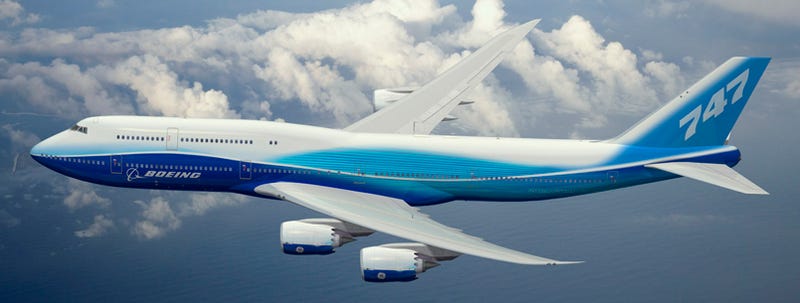
Boeing 747: Probably the most beloved of all commercial jets, the Boeing 747, also known as the Jumbo Jet has been a favorite of passengers and airlines for decades.

Scott Beale is an accomplished aviation professional as well as a seasoned entrepreneur and business developer. For more discussions on the aviation industry, visit this blog.