Showing posts with label aviation. Show all posts

Friday, August 23, 2019

More aviation developments affecting the industry in 2019

It’s imperative for players to keep in step with various trends affecting the future of the aviation industry. Hereunder are more developments in the industry shaking things up this year, listed by aerospace and aviation professional Scott Beale.
Image source: cyient.com
 Let’s keep in mind that as Brexit becomes a reality, it will cause much disruption in the entire European continent. Lots of talks of potential takeovers are happening, affecting airlines such as FlyBe and airports like Cardiff’s in Wales. Certain countries are scampering to avoid compromising their already ailing tourism, evidenced by Icelandair’s acquisition of lost-cost carrier Wow Air (the success of this move remains to be seen).

On the other hand, rapid growth is expected in Asia the rest of this year, even as ASEAN countries like Pakistan and China are making great strides to improve their aviation infrastructures (the latter’s Hainan province has lifted all restrictions on foreign aviation investment). Across the continents, the introduction of premium economy flight choices, as opposed to the traditional business class, is expected to get the likes of American Airlines and Emirates much bigger passenger share.
Image source: en.globes.co.il

We are also seeing a boom in the air freight industry, boosted by the now-common concept of same-day delivery among those who prefer shopping online. This is punctuated by complementary technology like digital in-flight shopping, the more prevalent use of AI, and heads-up display or HUDs allowed by more relaxed FAA regulations, Scott Beale adds.

Scott Beale has been in the aviation industry for more than 20 years, successfully growing businesses both which he acquired and founded. Visit this blog for similar posts.

Thursday, June 20, 2019

A brief look at the wonder that is aeromedical evacuation

Image source: defense.gov
Scott Beale has always believed that the standard aeromedical evacuation (AE) procedure is one of the greatest innovations the aviation industry has ever produced. While mostly used for injured military personnel, AE has been performed on countless occasions during times of crisis in the United States and around the world.

At its core, AE provides in-vehicle care to the injured and quick transport to the nearest medical centers. In the military, medics are trained under global standards, which are constantly updated. These individuals learn everything, from advanced life support to bleeding control to other critical care procedures.

The United States has its own U.S.A.F. School of Aerospace Medicine and Air Education and Training Command, in which medics learn the basics of conducting. AE.
Image source: wikimedia.org

During the 70s and 80s, the decreased use of medics in the field of battle inevitably caused the rise of AE, as well as its advancement in terms of efficiency. In the first two decades of the 21st century alone, nearly 50,000 personnel in the service have been saved by AE. And AE has been a constant, reassuring presence in times of armed conflict and crisis brought about by natural calamities.

What are your thoughts on AE? Feel free to share them with Scott Beale in the comments section below.

Ohio State University alumnus Scott Beale is an aviation and aerospace professional. He was responsible for expanding FlightWorks from a $1.5-million-dollar business when he purchased it in 2000 to a $90-million enterprise when he sold the business in 2010. More on Scott and his career here.

Adhering to regulatory and compliance programs is key to airline success

Image source: airbus.com
As we head into the 2020s, we should expect airlines to increase their focus on abiding by standardization and regulatory directives, says aviation professional Scott Beale. These compliance programs are related to environment and consumer rights, accounting, and finance.

Many airlines in the U.S. are already keen on adapting to new pricing rules set by the U.S. Department of Transportation, which demand the inclusion of fees and taxes when advertising flight fares. Across the Atlantic, the European Union is relentless in penalizing any airline that violates set emission limits, and airlines in the continent are paying heed.

Image source: nbaa.org
It should be noted that compliance increases airlines’ total cost of operations, even as it is meant to improved business sustainability and increase passenger safety. But airlines must understand that it is integral to the transformation of their operations. In addition, abiding by regulatory directives comes with necessary expenses that they must shoulder on their own and not pass on to passengers. In so doing, their compliance initiatives could be in better alignment with today’s needed business processes.

Those in the industry should know that initiatives like the Simplified Interline Settlement or SIS ease the effect of regulation on revenue concerns. Introduced by the International Air Transport Association, this aims to speed up and standardize the industry’s interline billing and settlement. But to best take advantage of such, airlines should actively search for cost-effective support programs and partners, adds Scott Beale.

Scott Beale has led various aviation firms to attain growth in revenues with his competencies in strategic and tactical planning, account development and acquisition, government contract and management, sales team training and supervision, and financial reporting. For more aviation reads, go to this page.

Friday, May 10, 2019

What makes for a good aviation mechanic?

An aviation mechanic—also called aircraft mechanic or aviation technician—is a professional who diagnoses, repairs, and troubleshoots the engines, systems, and technology of airplanes. The role they play in ensuring optimum plane performance and guaranteeing pilot and passenger safety cannot be underestimated, says aviation and aerospace expert Scott Beale.
Image source: imagine-america.org
 In other words, aviation mechanics have to be good all the time. But with aircraft systems and controls now becoming more computerized and digitized, they’ve to have at least get an associate degree. Maintenance workers need to have a thorough educational background on computer repair and aviation flight instruments. Solid experience is a big plus, but even seasoned professionals need to contend with the influx of (and be familiar with) new aviation technology.

The FAA, of course, has clear and strict guidelines to this end, mandating aircraft maintenance to be performed or at least supervised by certified mechanics. Indeed, credentials are key to this line of work; in fact, distinct certifications are required for plane bodywork and engine work.
Image source: aircraftmechaniccareer.com

One way to ensure that hired mechanics completely know what they’re doing is to check their Airframe and Powerplant (A&P) ratings. For this, mechanics need to be fluent in English, having a full, 30 months of aircraft maintenance experience, and at least be 18 years of age. A known alternative to an A&P rating is the completion of the Aviation Maintenance Technician School program.

There’s also the Aircraft Electronics Technician (AET) program certification received through the National Center for Aerospace and Transportation Technologies. Finally, the FCC issues a radio-telephone operator certification for avionics technicians who plan on working on airplanes’ communication equipment. All in all, being a good aviation mechanic is mostly dictated by his or her gained credentials, adds Scott Beale.

Aviation and aerospace professional Scott Beale is responsible for piloting the successful business turnaround of Aerodynamics Inc. As its CEO from 2011 to 2015, Scott helped increase the company’s profitability with new business initiatives and diversification efforts. Visit this blog for more posts on aviation.

There have been a ton of new technologies and developments in aviation in recent years: from hybrid and electric propulsion, improved fuel economy, and blended wing designs to reduced emissions, more secure connectivity, and additive manufacturing. In this blog, aviation expert Scott Beale lists down common themes and threads to watch in the aviation and aerospace sector in the coming years. Air taxis: Expect prototypes and demonstration flights of air taxis from various manufacturers in late 2019. These planes include Kittyhawk’s Cora, Boeing’s Aurora, and Airbus’ Vahana. Even Uber is working on bringing its services to the sky with its own set of experimental air taxis. Electric flight: Various startups are racing to develop prototypes for short-travel aircraft, hoping to energize regional aviation. For now, green aircraft propulsion is still in the middle of hybrid-electric and fully-electric. But agencies and manufacturers like NASA, Airbus, and Zunum are keen on developing full-fledged electric planes which could take to the sky in the coming decade. Narrow-body aircraft : Boeing just launched its 797 line, a new midsize, narrow-body plane that’s aimed to replace both the 757 and 767. This coincides with the first flight of the aviation manufacturer’s new 777X, which features folding wingtips that permit the plane to fit into standard-sized airport gates, explains Scott Beale. Unmanned planes: Boeing is also at the forefront in building military-grade aircraft, as evidenced by its prototype MQ-25 Stingray. The unmanned plane, the product of a multi-million US defense contract, also features a carrier-based, aerial-refueling system. Aerospace and aviation professional Scott Beale was responsible for expanding FlightWorks from a $1.5 million-dollar business when he purchased it in 2000 to a $90-million enterprise when he sold the business in 2010. Visit this blogfor related posts.

There have been a ton of new technologies and developments in aviation in recent years: from hybrid and electric propulsion, improved fuel economy, and blended wing designs to reduced emissions, more secure connectivity, and additive manufacturing. In this blog, aviation expert Scott Beale lists down common themes and threads to watch in the aviation and aerospace sector in the coming years.
Image source: newzbase.com

Air taxis: Expect prototypes and demonstration flights of air taxis from various manufacturers in late 2019. These planes include Kittyhawk’s Cora, Boeing’s Aurora, and Airbus’ Vahana. Even Uber is working on bringing its services to the sky with its own set of experimental air taxis.

Electric flight: Various startups are racing to develop prototypes for short-travel aircraft, hoping to energize regional aviation. For now, green aircraft propulsion is still in the middle of hybrid-electric and fully-electric. But agencies and manufacturers like NASA, Airbus, and Zunum are keen on developing full-fledged electric planes which could take to the sky in the coming decade.

Image source: eurekamagazine.co.uk
Narrow-body aircraft : Boeing just launched its 797 line, a new midsize, narrow-body plane that’s aimed to replace both the 757 and 767. This coincides with the first flight of the aviation manufacturer’s new 777X, which features folding wingtips that permit the plane to fit into standard-sized airport gates, explains Scott Beale.

Unmanned planes: Boeing is also at the forefront in building military-grade aircraft, as evidenced by its prototype MQ-25 Stingray. The unmanned plane, the product of a multi-million US defense contract, also features a carrier-based, aerial-refueling system.

Aerospace and aviation professional Scott Beale was responsible for expanding FlightWorks from a $1.5 million-dollar business when he purchased it in 2000 to a $90-million enterprise when he sold the business in 2010. Visit this blogfor related posts.

Monday, April 15, 2019

IoT is transforming the aviation industry

Image source: multidots.com
The Internet of Things or IoT is drastically changing the way various digital devices work, allowing them to interact with one another seamlessly and smartly. And its impact is beginning to truly manifest in various industries including aviation, says aviation and aerospace technology expert Scott Beale. A report by research and advisory company Gartner noted that around 20 billion interconnected devices will be available by 2020.

Image source: biginsights.co
Airlines and airports are now seeing the potential of IoT to revolutionize the field, ushering in new opportunities to improve on the most important facets of both travel and aviation. From making operations more efficient to optimizing passenger experience, IoT is helping eliminate various long-running issues in the industry.

Almost all airline owners today are already convinced that IoT implementation will benefit management, customers, and third-party partners. This can come in optimizing basic concerns such as baggage tracking, with RFID technology allowing for expediting misplaced and lost item retrieval and doing away with long wait times. IoT will likewise allow for real-time data on planes, from cargo monitoring, flight arrival and departure information, to the anticipation of possible mechanical issues.

IoT is also proving crucial in fully automating the check-in process and in improving flight efficiency, adds Scott Beale. Airline companies know the big role passenger convenience plays in travel; doing away with tedious check-ins is a big plus to gaining service offering an advantage over competitors. IoT aids flight efficiency by allowing for precise navigation routes and quick access to fuel expense and waste data, which of course hugely benefit both airport and airline operators.

Aviation and aerospace professional Scott Beale is skilled in commercial sales and aviation products marketing, government contracting, and business startups. For related posts, visit this blog.

Monday, March 18, 2019

The connection between fuel economy and aircraft engineering

Scott Beale feels that he cannot stress enough just how important fuel economy is in the aviation industry. Over the years, engineers, researchers, and scientists have experimented, researched, and tried countless ways of creating fuel-efficient aircraft.

Image source: aviation.stackexchange.com
Jet fuel has been reported to be the leading source of energy used in the United States, as it takes up a little under half of the entire energy consumption. The amount of energy to come out of jet fuel in the U.S. is so staggering that the output of electricity, the second most-used energy source in the country, only amounts to less than half of that.

Researchers and engineers have looked to fuel efficiency in cars and other road vehicles to modify aircraft. Although there has been a bit of success in the area, jets still use a gallon of fuel for every half-to-quarter-mile, depending on the aircraft. To put things in perspective, Scott Beale mentions the current hybrid car which travels more or less 50 miles for every gallon of fuel.

Image source: airbus.com

While alternative sources of energy are still out of the question (no alternative energy source can come close to powering a Boeing 787), there are viable options that aircraft engineers are looking into. Biofuels is one of the leading alternatives, since not only is it good for airplane engines, biofuels are also great for the environment.

Aviation professionalScott Beale piloted the successful business turnaround of Aerodynamics, Inc., increasing the company’s profitability with new business and diversification efforts as its CEO from 2011 to 2015. For more aviation-related reads, visit this blog.

Fun facts about airplanes that you probably didn’t know

The airplane is one of the most important inventions of the 20th century, effectively transforming relations among nations and leading to the growth of the global economy and globalization. But while we tend to take this aviation marvel for granted nowadays, here are some facts and trivia that you probably didn’t know about the ubiquitous airplane, compiled by aviation specialist Scott Beale.

Image source: travelup.co.uk

Firstly, did you know that pilots and their co-pilots are not allowed to eat the same meals? While not mandated by the FAA, a lot of airlines actually impose this rule as a way to ensure that there’s always a healthy pilot on board just in case one meal gets tainted.


The air inside airplanes is close to the atmosphere of the middle of the Sahara. Yes, it’s that dry, caused by pressurized cabin air that’s kept below 20% humidity. This is why your throat feels like there’s sandpaper in it when you’re in the air.
Image source: thrillist.com

It’s actually impossible for passengers to lock themselves in a plane’s bathroom. You probably notice the switch for the lavatory turned off and on before takeoff and landing, and it’s up to flight controllers to flip it open at any time, so don’t get ideas like smoking in the toilet.

Finally, have you ever noticed that little hole in the bottom of a plane window? That’s called the breather hole, says aviation expert Scott Beale. It’s there to regulate the pressure, to keep warm air in and make sure that the outside pressure won’t break the plane’s inner pane.

Aviation expert Scott Beale has been working in the aviation industry for more than 20 years, successfully growing businesses which he acquired and founded. He has led various aviation firms in attaining growth in revenues. Visit this blog for other interesting reads on aviation.

Friday, January 11, 2019

Are supersonic business jets coming back?

Image source: beam.land
It’s not as though traveling in supersonic speeds is a new technology; it has been around for years, epitomized by the once-success of the now-retired Concorde jets. There’s even “Flight of the Conchords,” an HBO series that pays a pun-based homage to the demise of the famed business jet.


The main turbulence the Concorde eventually had to face is its lack of commercial viability. Now, however, certain leaders and forerunners in the aviation industry are keen on bringing back the technology and improving vastly on it. For example, the company Boom claims that it can reduce the price of supersonic flights by up to 75 percent. This effectively means flight costs will be no different from a business-class flight on a 55-seater plane.

Image source: maxim.com

Then there’s the Aerion S2 jet, a project being developed collaboratively by top aviation companies and backed by billionaire Robert Bass, who is valued by Forbes at $4.9 billion. The Aerion is, indeed, promising; it is a modification of the Boeing 737 GE engine core which can reach Mach 1.4 when in flight. It’s a huge leap from the current standard of Mach 0.9.


Most analysts and experts in the industry believe that what’s impeding the technology from being viable for commercial use is the general lack of suitable engines for sound fuel economy. Also, most high-end jet engine varieties are still limited to NASA and military fighter jet use.


Yet while the fuel consumption and its corresponding cost is a real issue, more and more companies worldwide are buying into the resurrection of the supersonic jet, believing that the demand exists. After all, we all want faster flights.


Aviation and aerospace professional Scott Beale is skilled in commercial sales and aviation products marketing, government contracting, and business startups. Check out this linkfor more aviation-related posts.

Monday, December 3, 2018

Aircraft talk: A closer look at the blended wing body concept

Image source: nasa.gov

The idea behind the blended wing body in aircraft is to provide a configuration that allows for the wings to blend smoothly into a wide and tailless fuselage. With this flat and wide fuselage comes better aircraft lift, even as the wings allow for needed balance.


The concept is meant principally to replace the standard cylindrical fuselage and improve fuel range and economy in modern aircraft. The smaller and less angular surface area will likewise lead to less drag, effectively creating gains in aerodynamics. Again, the blended wing body is premised on integrating the wing structure with the central body of the plane and should, therefore, allow for lighter structural weight.


Design-wise, these aircraft will be powered by three jet engines, which are placed on the back. Researchers believe that this will reduce noise levels during landings and take-offs, as the noise coming from the engine will be shielded by the aircraft itself.
Image source: bild.de


For now, a significant challenge in realizing fully deployable blended wing body models is how to make aircraft based on the design more stable and easier to control. After all, the presence of a tail is what allows for stability in current, standard planes. It may take some time before planes based on the design become commercially available, but the benefits of developing this technology are simply too significant for the industry to ignore.


Scott Beale piloted the successful business turnaround of a number of aviation companies, increasing their company’s profitability with new business and diversification efforts. For more information on Mr. Beale’s past and current projects, follow this page.

Friday, November 9, 2018

The possibility of a single-pilot passenger plane

Image source: best-wallpaper.net

There was a time when passenger planes had three pilots on the flight deck. Then in the 1980s, the development of Boeing 757 transformed the way cockpits are designed. The number of pilots had also been reduced to two with the help of the progress of flight technology.


Decreasing that number further to one has proven to be difficult. Firstly, current European aviation regulation requires passenger planes with at least 19 seats to be flown by a minimum of two pilots for safety, especially in long-haul journeys, and security. Passengers would also probably be concerned of flying in a single-pilot plane because of news of accidents, deliberate or otherwise, of aircrafts.

Image source: caa.gov.qa

But having commercial jets that can be operated by one pilot may become a necessity in a few years. There is currently a pilot shortage, which is exacerbated by the fact that the aviation industry is continuing to grow. Furthermore, airline companies can save billions of dollars in salaries and training expenses by requiring just a single pilot.


Aircraft manufacturers are designing advanced cockpits that can be operated by a single person. For example, the vast array of knobs and switches can be changed into more digital interfaces. It may not be in the near future, but single-pilot passenger aircrafts are becoming more and more possible.


Scott Beale is an accomplished business developer, entrepreneur, and aviation professional. His expertise includes commercial sales and marketing of aviation products, government contracting, FAA certifications, maintenance report operations, and startup operations. Visit this website for more information about him.

Saturday, September 1, 2018

The Peculiar Rules Of Air Travel Routes

Everyday wisdom suggests that the fastest way to a destination is a straight line, and so it usually is with land transportation, with roads and railways cutting a route as straight as possible between two points. Comparing the flight paths taken by aircraft to that of maps, however, would reveal that airplanes do not fly in straight lines. In many cases, air travel takes on a semicircular appearance or even immensely confusing paths across the globe to reach their destination.

The most obvious of the reasons behind the peculiar direction of flight paths is the shape of the Earth itself. The Earth is round, and the shortest way to two destinations across the planet is not a straight line but an arc.


Image source: lfightradar24.com

Air currents and other atmospheric conditions are also a critical factor in planning the flight paths of aircraft. Specific air currents like the Gulf Stream can aid aircraft across vast distances, reducing travel time by a considerable margin. Even individual variations of wind patterns can make certain international flight routes financially preferable.

The limitations of aircraft have also affected flight paths in the past. Transatlantic flights from North America frequently used to stop over Shannon, Ireland, on their way to continental Europe for refueling purposes.


Image source: weatherworksinc.com

The politics of flight are also a crucial factor in determining the flight paths of international air travel. Major airlines pay an immense amount of money to sovereign nations to pass through their airspace en route to their destination, with some nations charging heftier fees than others. Air routes are often planned along minimizing and avoiding these fees, which can considerably add up, leading to unusual flight paths. In the past, no fly zones—such as those in the former Soviet Union—have created unusually long international flights.

Scott Beale is a seasoned entrepreneur and business developer with over 20 years of experience in the aviation industry. Learn more about the fine points of the industry of air travel from this blog.


Saturday, August 4, 2018

What It Takes To Be An Airborne Intelligence, Surveillance, And Reconnaissance (Isr) Operator

An ISR operator plays a crucial role in both the planning and execution of a country’s air force missions. They oversee the collecting and collating of information on the enemy’s activity, movements, and strength.

Image source: offutt.af.mil

ISR operators deliver this confidential and top-secret intelligence to the higher-ups in the command using various classified equipment and intel-gathering techniques. They are veritable specialists that require rigorous training to ensure that the air force is always ahead of the enemies’ own intel and that future missions are guaranteed success.

For one to be qualified to apply for an ISR operation position, they must have graduated from high school and attained at least 15 college credits in the GED. The applicant must likewise display extensive knowledge of aircraft equipment and procedures. They should be eligible for deployment and mobilization anywhere in the world and must complete various tests including a polygraph and Single Scope Background Investigation (SSBI).

The ISR operator candidate should be between the ages of 17 and 39 and must be at least 64 inches (5’3”) in height and no taller than 77 inches or 6-foot-4. Also, they must have no history of any temporomandibular joint pain or disorder. When the applicant is deemed qualified, he or she must complete 7.5 weeks of both basic military training and Airmen’s Week.

Image source: af.mil

Aviation and aerospace professional Scott Beale was responsible for expanding FlightWorks from a $1.5 million-dollar business when he purchased it in 2000 to a $90 million enterprise when he sold the business in 2010. For more info on Scott’s work and career, visit this page.

Thursday, June 28, 2018

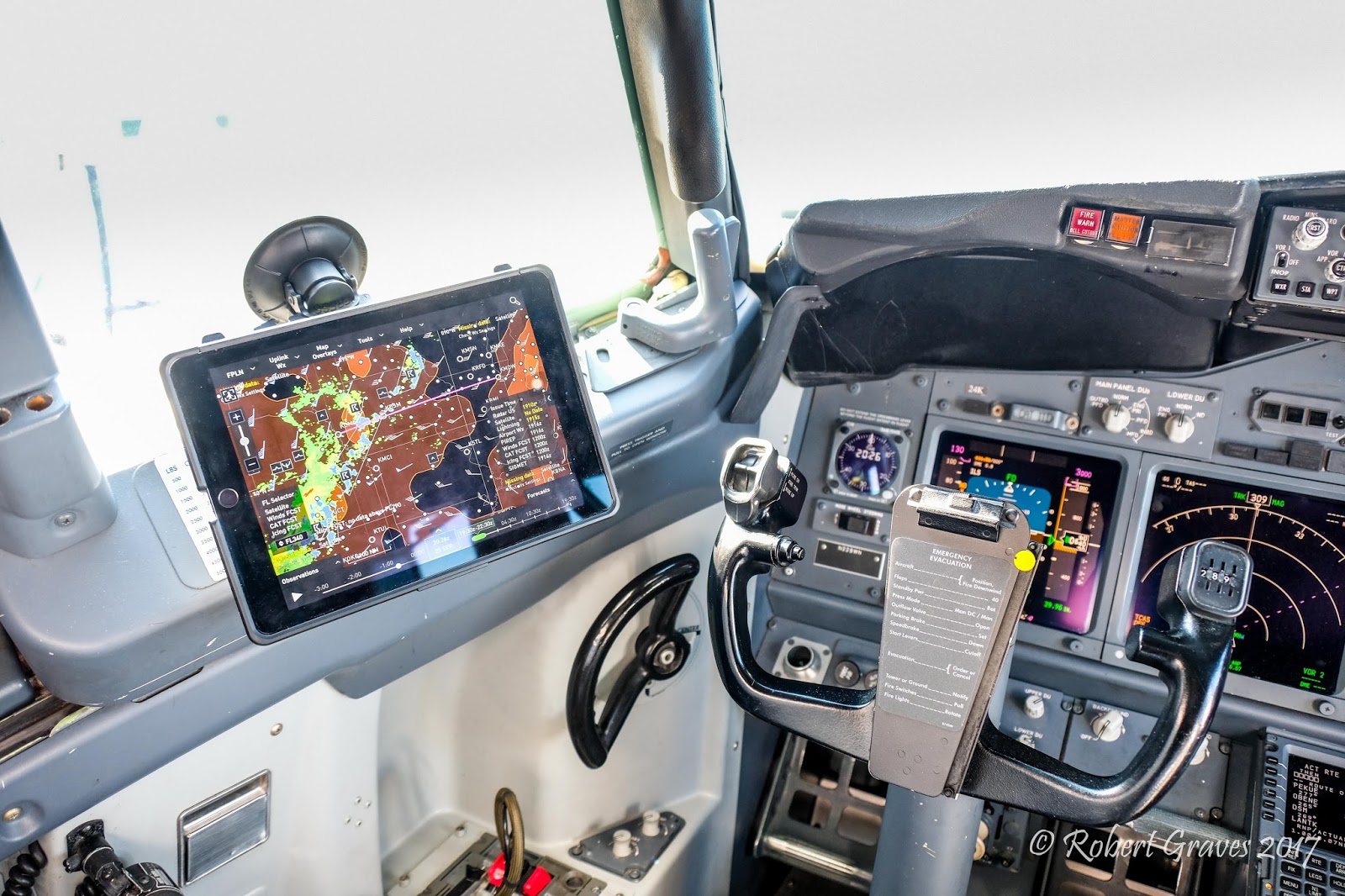
Weather Apps Every Pilot Should Find Very Useful

There is a slew of weather apps currently available to the public via smartphones, laptops, and PCs. These are incredibly helpful in knowing what to wear and what to bring when stepping out. But where these apps really shine is in the aviation industry.

Weather apps help airport tower personnel and pilots determine visibility, chances of turbulence, thunderstorms, etc. It is imperative that pilots have some of these installed and check them regularly before the flight. Below are three of the best ones out there, both those free to use and those that come with a price.

Image source: universalweather.com

MyRadar: This is free and easy to use app that features a high-quality looping radar bundled with an AIRMETS and TFR overlay. Of course, the data the app provides is taken from National Weather Service.

CloudTopper: Though strictly not a weather app, CloudTopper is incredibly helpful to IFR and VFR pilots for estimating distance to cloud formations and the feet needed to go over them. You can use your iPhone’s camera with the clouds, and the app will tell you their exact level. This app costs a measly $0.99.


Image source: robertgraves.com

METARs Aviation Weather: Never mind the $6.99 price; this is a fast and efficient app for checking weather conditions as well as tracking airports via color-coded icons. The app has tons of features, including customizable notifications for VFR/MVFR/IFR/LIFR. It likewise translates aviation jargons to layman’s English for easier comprehension.

Scott Beale has been working in the aviation industry for more than 20 years, successfully growing businesses that he acquired and founded. He has led various aviation firms to attain growth in revenues. More on Scott’s work here.


Sunday, June 3, 2018

America’s Best Fighter Aircraft

America is the most powerful country in terms of military strength. And when it comes to defense aviation, the U.S. is king when it comes to air-to-air or air-to-ground combat. Here are a few of America’s best fighter aircraft today.

Image source: washingtontimes.com

The Lockheed Martin F-22 Raptor is currently the best fighter jet in production in the entire world. It’s a single-seat jet with twin engines and is 5th generation supersonic supermaneuverable craft designed for air-to-air and air-to-ground combat. It is the product of two of the most reputable defense contractors in the U.S., namely Lockheed Martin and Boeing Defense, Space & Security. One of the aircraft’s biggest strength is its stealth capability as it remains undetectable in most radars.  
The Lockheed Martin F-35 Lightning II is similar to the F-22 but has a smaller build. With just a single engine, it is designed for ground attacks, reconnaissance, and air defense missions. It also has excellent stealth capabilities. The F-35 has three variants that differ in how they take-off and land. The F-35A has standard take-off and landing procedures, the F-35B has a short take-off and can land vertically, and the F-35C is carrier-based. 

Lastly, the F-15 Strike Eagle is a classic yet powerful jet in America’s arsenal. Developed in the ‘80s, this was an all-weather multi-role fighter and was deployed in military operations in Iraq, Afghanistan, and Libya.

Image source: washingtontimes.com

Scott Beale is an aerospace defense expert who helped pilot successful business turnarounds of a number of aviation companies. For more articles like this, visit this link.

Thursday, November 30, 2017

Aviation tidbits: Learn more about the industry

It sounds cliché, but it’s true – man has been captivated with flight since the dawn of time. After centuries upon centuries of dreaming and planning, man has finally realized his dream of soaring in the sky. With the advancement of technology in the past 100 years, flight has evolved in an unprecedented manner. Below are some of the interesting facts that have to do with aviation. 

Image source: scienceabc.com

  •  Even with the knowledge that airplanes and flying, in general, is the safest way to travel, people are still afraid to fly. Perhaps knowing the aircraft are very well protected against lightning strikes can help minimize the fear.
  •  Flying at a high altitude alters the bodily senses in many different ways. People hear things differently. Their bodies react to alcohol more quickly. And many of the things they eat have altered tastes. 

  •  The fear of flight is called aviophobia.
  •  Around 8 out of every 10 major plane accidents were found to be within the first three minutes from taking off, and eight minutes before landing. This is why to minimize such risks, people are urged to take non-stop flights whenever they can. 

  •  In 1977, one of the worst airplane incidents occurred when two passenger-full planes collided on the runway. 
Image source : technocrazed.com

Scott Beale has been a business leader in the aviation industry. For more discussion on aviation, visit this page.